
If you've spotted a massive, two-inch hornet buzzing around your property, you're probably wondering how to trap Asian giant hornet before it becomes a serious problem. These insects, nicknamed "murder hornets" by the media, are genuinely intimidating, and the concern around them is completely understandable. But here's the good news: with the right knowledge and a smart approach, you can protect your outdoor space without panic, pesticides, or expensive exterminator bills.
This guide covers everything you need to know, from identifying the real thing to understanding why deterrence is often smarter than trapping, and what steps actually work to keep these hornets away from your family and your yard.
Table of Contents
How to Identify the Asian Giant Hornet
Before you set a single trap, you need to be absolutely sure of what you're dealing with. Misidentification is one of the most common mistakes homeowners make, and it leads to a lot of wasted effort and unnecessary alarm.
What Makes It Unique
The Asian giant hornet (Vespa mandarinia) is the world's largest hornet species. Adults typically reach about two inches in length, which is noticeably larger than any native North American wasp or hornet. The head is wide and orange-yellow, almost cartoonishly large compared to the rest of the body. The abdomen is striped in bold bands of orange and dark brown or black, giving it a striking, almost tiger-like appearance.
The stinger is longer than that of most stinging insects and capable of penetrating standard beekeeping suits. This is not a creature you want to handle casually.
Common Lookalikes to Watch Out For
Most people who think they've spotted an Asian giant hornet have actually encountered one of these far more common insects:
- European hornets: Large and yellow-brown, but notably smaller and without the bold orange head.
- Bald-faced hornets: Black and white coloring, much smaller overall.
- Cicada killers: Intimidating in size but solitary and extremely docile around humans.
- Yellow jackets: Aggressive but much smaller, often mistaken for hornets.
If you're unsure, photograph the insect from a safe distance and compare it against verified identification resources from your state's department of agriculture before taking any action.
Where They've Been Found
As of the most recent confirmed reports, Asian giant hornets have been detected primarily in the Pacific Northwest, specifically in Washington State and parts of British Columbia. If you live outside of this region, the insect you're seeing is almost certainly something else. That said, monitoring efforts are ongoing, and range expansion is possible, which is why awareness matters everywhere.
Understanding the Real Threat Level
The "murder hornet" nickname caused a wave of fear that wasn't entirely proportionate to the actual risk for most Americans. Understanding what these hornets actually threaten helps you respond with calm, targeted action rather than panic.
The Danger to Honeybees
The most serious and well-documented threat from Asian giant hornets is to honeybee colonies. A small group of these hornets can decimate an entire hive in a matter of hours during what researchers call a "slaughter phase." For beekeepers, this is a genuine and heartbreaking concern. The economic ripple effects on pollination and agriculture are significant, which is why eradication efforts are taken so seriously by government agencies.
The Danger to Humans
For the average person who isn't actively disturbing a nest, the direct human risk is real but often overstated. Asian giant hornets are not particularly aggressive toward humans unless their nest is threatened. Their venom is potent, and multiple stings can cause serious medical complications, especially in individuals with allergies. Deaths have occurred in Asia, primarily in rural areas where medical care was delayed and victims received an extremely high number of stings.
The takeaway: respect them, don't provoke them, and have a plan. But there's no need to treat your backyard like a war zone.
Why Early Action Still Matters
Even if your personal risk is low, early detection and prevention are important for the broader ecosystem. Reporting confirmed sightings helps authorities track the spread and conduct eradication before populations become established. This is genuinely one of those situations where individual action contributes to a larger public good.
How to Trap Asian Giant Hornet: Methods That Work
If you're in a confirmed or suspected area and want to know how to trap Asian giant hornet effectively, there are several methods used by researchers and homeowners alike. Some are DIY-friendly; others are better left to professionals.
Bottle Trap Method
This is one of the most widely recommended DIY approaches. You'll need a large plastic bottle, a sweet liquid bait, and some patience. Here's how it works:
- Cut the top third off a large plastic bottle and invert it into the lower section, creating a funnel that insects can enter but struggle to exit.
- Fill the bottom with a bait solution. A mixture of orange juice, rice wine or sake, and a small amount of white sugar is commonly used. Avoid honey, which can attract and harm native bees.
- Hang the trap at a height of about five to six feet, near areas where you've seen activity but away from high-traffic human areas.
- Check and refresh the bait every few days. Dispose of contents carefully.
This method can capture hornets, but it also captures other insects. Always check your trap carefully and photograph any large hornets before disposing of them, especially if you suspect Asian giant hornets.
Commercial Sticky Traps
Sticky traps designed for large wasps and hornets are available from garden and pest control retailers. These use a pheromone or sweet-scented lure to attract insects onto an adhesive surface. They're easy to set up and require minimal maintenance. The downside is that they can also trap beneficial insects, so placement matters a great deal.
Place them away from flowering plants and garden areas where pollinators are active. Eaves, fence posts near wooded areas, and corners of outbuildings are better choices.
Professional Monitoring Traps
In areas where Asian giant hornets have been confirmed, state agricultural departments often deploy specialized monitoring traps and may provide them to residents free of charge. These are designed to capture hornets alive so they can be tagged and tracked back to their nest for eradication. If you're in Washington State or another affected region, check with your local extension office before setting your own traps, because coordinating with official monitoring programs is far more effective than going it alone.
Expert tip: If you capture what you believe is an Asian giant hornet, do not release it and do not discard it. Photograph it, freeze it in a sealed container, and contact your state department of agriculture immediately. Your sample could be invaluable for tracking efforts.
Why Deterrence Often Beats Trapping
Trapping is reactive. By the time you're setting traps, you're already dealing with a problem. Deterrence, on the other hand, is about making your property less attractive and less accessible in the first place. For most homeowners, deterrence is the smarter, safer, and more sustainable long-term strategy.
Eliminating Attractants
Hornets are drawn to protein sources in spring and early summer, and to sweet foods later in the season. A few simple habits can reduce how attractive your yard is:
- Keep outdoor trash cans tightly sealed, especially during late summer and fall.
- Clean up fallen fruit from trees promptly. Rotting fruit is a powerful attractant for all wasp and hornet species.
- Avoid leaving pet food outside for extended periods.
- Rinse sugary drink cans and bottles before placing them in recycling bins.
- When dining outdoors, cover food and drinks when not actively eating.
None of these changes require significant effort, but together they make a real difference in how much stinging insect activity you see around your home.
Securing Potential Nesting Sites
Asian giant hornets nest underground, often in abandoned rodent burrows or in decaying wood. Unlike paper wasps or yellow jackets, they don't typically build exposed aerial nests. Reducing available nesting habitat is a meaningful preventive step:
- Fill in any visible burrows or holes in the ground around your property.
- Remove or chip decaying stumps and logs that aren't serving a specific purpose.
- Keep woodpiles elevated and away from the house.
- Inspect outbuildings, sheds, and crawl spaces periodically for signs of nesting activity.
Territorial Behavior and How to Use It
Here's something most people don't know: wasps and hornets, including many species related to the Asian giant hornet, are highly territorial. They will actively avoid establishing a nest near an existing one. This instinct, which evolved to prevent resource competition, is something you can actually use to your advantage. It's the principle behind one of the most effective and completely non-toxic prevention tools available.
Using Decoy Nests as a Prevention Strategy
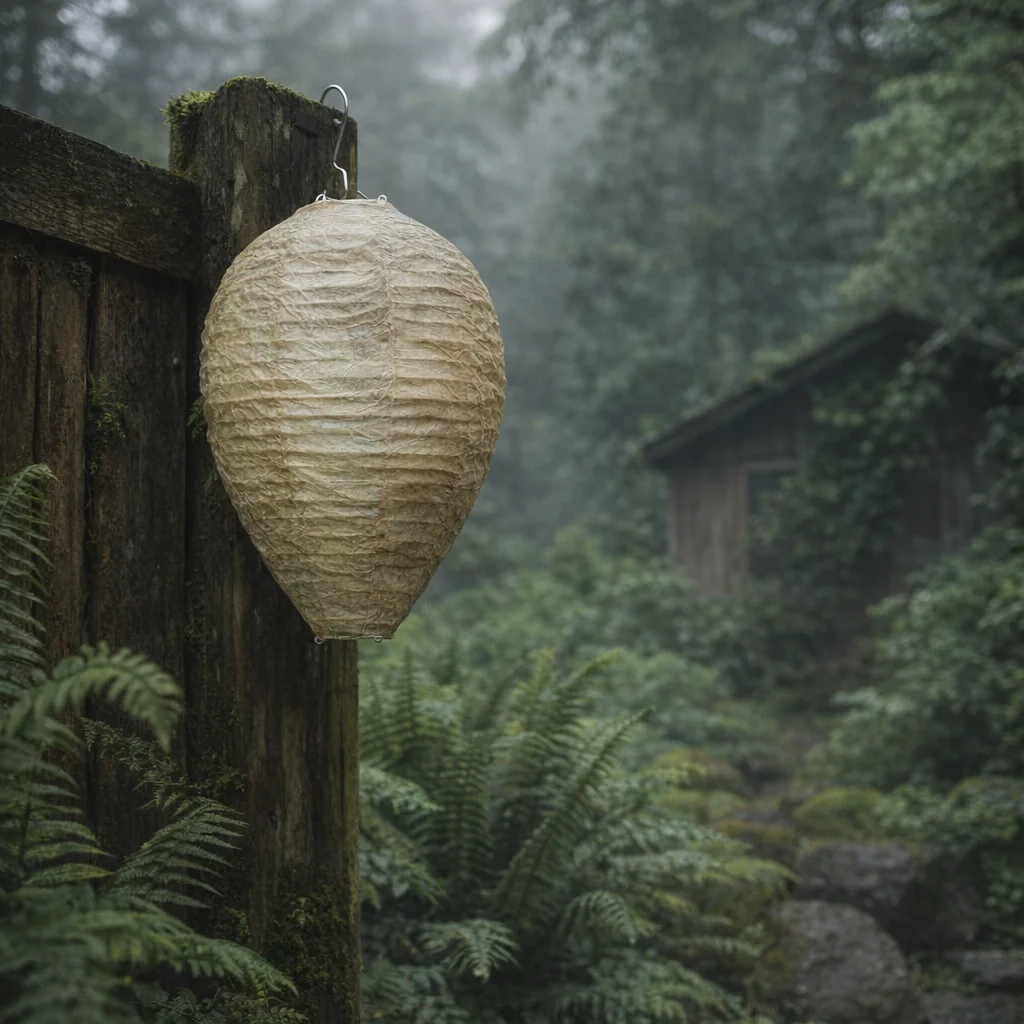
If you've never heard of a decoy nest, you're not alone, but once you understand how they work, you'll wonder why you didn't try them sooner. The idea is elegantly simple: hang a realistic-looking fake nest in a visible location, and territorial wasps and hornets will steer clear of the area, believing it's already claimed by another colony.
The Science Behind the Strategy
Wasps and hornets invest enormous energy in building and defending their nests. Establishing a new colony near an existing one invites conflict over food sources and territory. As a result, scouts looking for nesting sites will typically bypass an area where a nest is already visible. This isn't a guarantee, and it won't work on every species in every situation, but it's a well-observed behavior that pest control professionals and outdoor enthusiasts have been leveraging for years.
The key is that the decoy needs to look convincing enough to register as a threat to a scouting insect. Flimsy paper bags or obvious fakes won't cut it. The more realistic the decoy, the better it performs.
Where and How to Hang Them
Placement is everything with decoy nests. Follow these guidelines for the best results:
- Hang them at least fifteen feet away from any actual wasp activity. You want to establish a territorial perimeter, not mark a spot that's already occupied.
- Position them where they're clearly visible, under eaves, on porch ceilings, from tree branches near outdoor seating areas, or along garden fences.
- Use multiple decoys around the perimeter of your property for broader coverage, especially if you have a large yard or garden.
- Hang them before wasp season begins in your area, typically early spring, so scouts encounter them during the nest-searching phase.
Our WaspAway Wasp Nest Decoys are designed with exactly this use case in mind. They're crafted to look convincingly realistic from a distance, which is what actually matters to a scouting hornet, and they hang easily from any overhead surface. For a completely non-toxic, zero-effort prevention method, they're hard to beat.
Combining Decoys with Other Methods
Decoy nests work best as part of a layered approach. Use them alongside the attractant-elimination habits described above, and you've created an environment that's genuinely less hospitable to stinging insects without harming a single bee or beneficial insect. For families with young children, pet owners, or anyone who wants to enjoy their outdoor space without worrying about stings, this combination is the sweet spot between effective and effortless.
Key takeaway: Decoy nests won't eradicate an existing infestation, but they're one of the most effective tools for preventing one from starting in the first place. Think of them as a "no vacancy" sign for wasps and hornets.
When and How to Report a Sighting
If you believe you've genuinely spotted an Asian giant hornet, reporting it promptly is one of the most important things you can do. Early detection is the cornerstone of the eradication strategy being used by wildlife authorities.
Who to Contact
Your first call should be to your state's department of agriculture or department of fish and wildlife. In Washington State, the Washington State Department of Agriculture (WSDA) has a dedicated reporting system for Asian giant hornet sightings. Most states have similar mechanisms in place or can direct you to the appropriate federal contact.
The USDA's Animal and Plant Health Inspection Service (APHIS) also maintains a national reporting network. A quick web search for "report Asian giant hornet" plus your state name will get you to the right place quickly.
How to Document Your Sighting
Before you report, gather as much information as possible. Authorities will want to know:
- The exact location, including GPS coordinates if you have them.
- The date and time of the sighting.
- The number of insects observed.
- Whether you observed any nesting behavior or a specific nest location.
- Photographs or video, if you were able to capture them safely.
Do not attempt to destroy a suspected nest on your own. If the nest is confirmed, trained professionals will handle eradication using appropriate protective equipment. This is not a DIY situation once a nest is involved.
What Happens After You Report
Agencies will typically follow up to verify the sighting, often requesting the photographs you've taken. If the sighting is confirmed, a response team will be dispatched to locate and eradicate the nest. In some cases, they may ask for your cooperation in setting monitoring traps on or near your property. This is a collaborative process, and your participation genuinely matters to the outcome.
Staying Safe During Hornet Season
Whether or not Asian giant hornets are present in your area, general hornet safety is worth reviewing. The principles apply across species and can prevent a lot of painful encounters.
Personal Protective Habits
Most stings happen when people accidentally disturb a nest or get too close to an active forager. A few common-sense habits go a long way:
- Wear shoes outdoors, especially in grassy areas where ground-nesting species may be active.
- Avoid wearing bright floral patterns or heavy fragrances when spending time outdoors during peak hornet season, late summer through early fall.
- Move slowly and calmly if a hornet lands on you. Swatting triggers defensive stinging behavior.
- Keep windows and doors screened, especially in areas with known hornet activity.
- Check outdoor furniture, shoes left outside, and children's play equipment before use during peak season.
What to Do If You're Stung
For most people, a single sting from any hornet species is painful but manageable. Remove yourself from the area immediately, as stinging insects release alarm pheromones that can trigger additional stings from nearby colony members. Wash the sting site with soap and water, apply a cold pack to reduce swelling, and take an over-the-counter antihistamine if needed.
Seek emergency medical attention immediately if you experience difficulty breathing, throat swelling, dizziness, or any signs of anaphylaxis. These are signs of a potentially life-threatening allergic reaction and require prompt treatment.
Protecting Beekeepers and Backyard Hives
If you keep bees, the threat calculus changes significantly. Asian giant hornets can wipe out an entire colony, and the loss is devastating both emotionally and economically. Beekeepers in affected regions should monitor hives closely during late summer and fall, when hornet predation peaks. Installing entrance reducers on hives makes it harder for hornets to access the colony. Placing decoy nests near your apiary can also discourage hornets from establishing territory nearby, adding another layer of passive protection without any risk to your bees.
For beekeepers: Japanese honeybees have developed a fascinating defense against Asian giant hornets, surrounding them in a ball and generating heat that kills the hornet. Western honeybees, which are kept by most North American beekeepers, haven't developed this adaptation, making external deterrence strategies especially important.
Frequently Asked Questions
Can I trap Asian giant hornets myself, or do I need a professional?
You can set monitoring traps yourself, and in areas where the hornets have been confirmed, authorities sometimes encourage this as part of community detection efforts. However, if you locate an actual nest, do not attempt to destroy it on your own. Asian giant hornets defend their nests aggressively, and standard protective gear is not sufficient. Contact your state department of agriculture for professional eradication assistance.
What's the best bait to use when trying to trap Asian giant hornets?
Research from Washington State has found that a mixture of orange juice, rice wine or sake, and sugar is effective at attracting Asian giant hornets while being less attractive to native bees than honey-based baits. Avoid using anything honey-based, as it can draw in and harm beneficial pollinators. Refresh your bait every few days, especially in warm weather, as it ferments and loses effectiveness quickly.
Do decoy nests actually work against Asian giant hornets specifically?
Decoy nests are most thoroughly documented as deterrents for paper wasps and yellow jackets, which are aerial nesters with strong territorial instincts around visible nests. Asian giant hornets nest underground, so the territorial response may differ. That said, decoy nests remain an excellent deterrent for the wide range of stinging insects that do respond strongly to them, including many species you're far more likely to encounter. They're a smart addition to any layered outdoor pest prevention strategy.
Are Asian giant hornets established across the United States?
No. As of the most recent confirmed data, Asian giant hornets have been found only in a limited area of the Pacific Northwest, primarily Washington State and adjacent parts of Canada. Eradication efforts have been active and ongoing. If you live outside this region, the large hornet you're seeing is almost certainly a native species, most likely a European hornet or cicada killer. Always verify identification before reporting or taking action.
How do I know if there's an Asian giant hornet nest on my property?
Asian giant hornets nest underground, often in existing burrows or under tree roots. Signs of a nearby nest include seeing multiple large hornets flying in and out of a specific ground-level opening, finding decapitated honeybees near a hive (a hallmark of hornet predation), or observing unusually large hornets repeatedly returning to the same location. If you suspect a nest, observe from a safe distance and contact your state agricultural department rather than investigating further on your own.
Wrapping Up: A Calm, Smart Approach to Asian Giant Hornets
Knowing how to trap Asian giant hornet is genuinely useful information if you live in an affected area, but it's only part of the picture. The most effective strategy combines smart prevention, early detection, proper reporting, and a few well-placed deterrents that work passively so you don't have to think about them every day.
For most homeowners, the goal isn't to wage war on every stinging insect in the yard. It's to enjoy your outdoor space comfortably, protect your family and any bees you keep, and respond appropriately if something genuinely threatening shows up. That's a completely achievable goal with the right approach.
If you want to start with one of the easiest, most effective, and most family-friendly steps you can take today, hanging a realistic decoy nest is hard to argue with. Our WaspAway Wasp Nest Decoys give you a non-toxic, zero-maintenance line of defense that works with nature's own territorial instincts. No chemicals, no traps to check, no risk to beneficial insects. Just a smarter way to enjoy your yard all season long.