
If you have been searching for the best Asian giant hornet trap, you are probably not doing it out of idle curiosity. Maybe you spotted one of those enormous, intimidating insects near your porch. Maybe your neighbor lost a hive of bees to a hornet attack. Or maybe you just want to enjoy your backyard this summer without the low-grade anxiety of knowing these things are out there. Whatever brought you here, you deserve a straight answer about what actually works and why.
Asian giant hornets, sometimes called murder hornets in the press, are genuinely alarming to encounter. They are the largest hornets in the world, they are aggressive when defending their colony, and they have a documented ability to devastate honeybee populations in a matter of hours. The good news is that protecting your outdoor space does not have to mean spraying harsh chemicals everywhere or spending a fortune on professional extermination services every season.
This guide breaks down the real options available to you, compares the approaches honestly, and helps you land on a solution that fits your lifestyle and your yard.
Why Asian Giant Hornets Are Different From Your Average Backyard Pest
Most people have dealt with yellow jackets at a picnic or paper wasps building a nest under the eaves. Asian giant hornets are a different category of problem entirely, and understanding why matters when you are choosing how to deal with them.
They Are Territorial in a Very Specific Way
Unlike yellow jackets, which seem to show up everywhere food is present, Asian giant hornets are highly territorial about nesting zones. They establish a perimeter and defend it fiercely. This means that once a colony decides your yard or a nearby tree line is home territory, every trip outside becomes a calculated risk. The good news buried in this fact is that their territoriality is also their vulnerability. They are predictable in how they respond to perceived threats, including the presence of other established nests.
They Are Devastating to Pollinators
If you keep bees, grow a garden, or simply care about the local ecosystem in your area, Asian giant hornets represent a serious threat beyond personal safety. A small scouting group can locate a honeybee hive, and within hours a raiding party can eliminate the entire colony. For backyard beekeepers, this is a nightmare scenario. For gardeners who rely on pollinators, a local collapse of bee populations has ripple effects that last for seasons.
They Are Expanding Their Range
Asian giant hornets were first confirmed in North America in 2019, and the range of reported sightings has continued to grow. If you are in the Pacific Northwest, parts of Canada, or even further east, the question of how to protect your property is becoming more urgent every year. Waiting until you have a confirmed nest nearby before taking action puts you behind the curve.
"The best time to set up hornet deterrents is before you have a problem. By the time you are reacting, the colony is already established and the risk is at its highest."
What Actually Works Against Asian Giant Hornets
The market for wasp and hornet control is crowded, and a lot of what you will find is designed for common species, not the specific behavior patterns of Asian giant hornets. Here is a clear-eyed look at the main approaches and how they hold up in real-world use.
Liquid Bait Traps
These are the plastic containers you fill with a sweet or protein-based liquid to lure hornets in and trap them. They work reasonably well for yellow jackets and common wasps. For Asian giant hornets, the results are more mixed. The bait needs to be species-specific to be effective, and most commercial baits are not formulated with these hornets in mind. You also have to deal with the unpleasant task of emptying and refilling the trap regularly, and the liquid can attract other insects, birds, and pets in ways that create new problems.
Spray Insecticides
Aerosol sprays can kill individual hornets on contact, but they do nothing to address the colony. Spraying a scout hornet might actually make things worse, as dying or agitated hornets can release alarm pheromones that signal others to attack. Using sprays near a nest is genuinely dangerous and is not recommended without professional equipment and training. As a long-term deterrent strategy, sprays simply do not hold up.
Professional Extermination
If you have an active nest on your property, calling a professional is the right call. But professional extermination is reactive, expensive, and does not prevent a new colony from establishing itself in the same area next season. It is a solution to a crisis, not a strategy for ongoing protection.
Territorial Decoy Nests
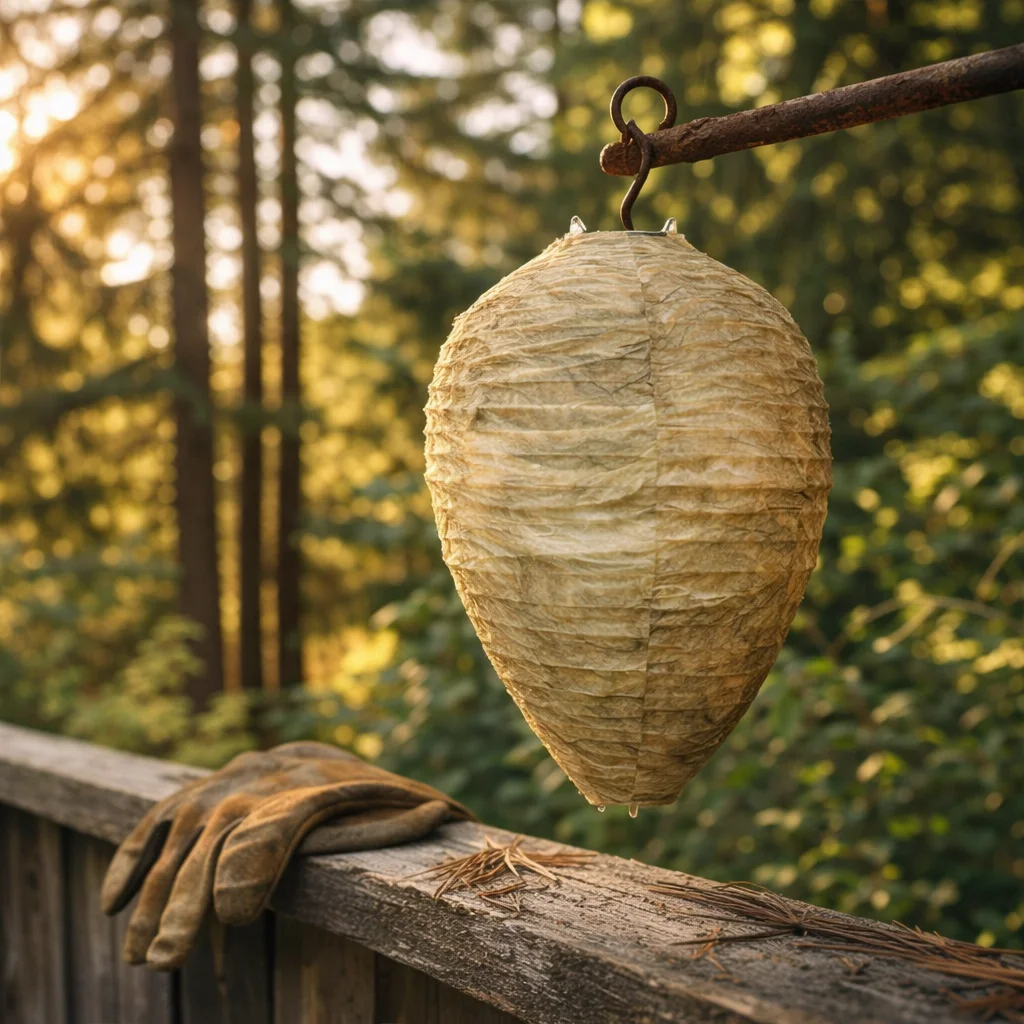
This is where things get genuinely interesting. Asian giant hornets, like most stinging insects, are highly territorial. They will not establish a new colony within the established territory of another nest. A realistic decoy nest, hung in a visible location around your property, exploits this instinct directly. The hornets see what appears to be an occupied nest and choose to nest elsewhere. No chemicals, no maintenance, no risk of agitating an active colony. It is prevention working with nature rather than against it.
Decoy Traps vs. Chemical Solutions: An Honest Comparison
Both approaches have their place, and being honest about the trade-offs helps you make the right call for your specific situation. Here is how they stack up across the factors that matter most to most homeowners and outdoor enthusiasts.
| Factor | Decoy Nest | Chemical Trap or Spray |
|---|---|---|
| Safety for kids and pets | Completely non-toxic | Requires careful handling and placement |
| Ongoing maintenance | Hang it and leave it | Regular refilling, cleaning, or reapplication |
| Effect on pollinators | No harm to bees or beneficial insects | Can kill non-target species |
| Environmental impact | Zero chemical footprint | Residual chemicals in soil and water |
| Coverage area | Deters from a wide territorial radius | Works only where applied |
| Best use case | Prevention and ongoing deterrence | Active infestation response |
The honest takeaway here is that these approaches are not really competing with each other. Chemical solutions are crisis management tools. Decoy nests are a prevention strategy. The smartest approach for most homeowners is to use decoys proactively and keep a targeted spray on hand for the rare occasion when an individual hornet needs to be dealt with directly.
"Prevention is not just cheaper than extermination. It is safer, less stressful, and better for every living thing in your outdoor space."
Our Top Pick for the Best Asian Giant Hornet Trap
After looking at what is actually available and what works with the territorial behavior of Asian giant hornets specifically, the WaspAway Wasp Nest Decoy stands out as the most practical, low-effort, and genuinely effective option for most households. Here is why it earns that position.
It Works With Hornet Psychology, Not Against It
The decoy is designed to look like an established nest to passing hornets. When a scout is searching for a new nesting site, the visual signal of an occupied territory is enough to redirect the search elsewhere. You are not trying to kill every hornet you see. You are making your property an unattractive option before the decision to nest is ever made. That is a fundamentally smarter approach.
Zero Toxicity, Zero Worry
If you have children who play in the yard, dogs who roam the garden, or you simply prefer not to introduce chemicals into your outdoor environment, this matters enormously. There is nothing in or on the decoy that poses any risk to people, pets, or the surrounding ecosystem. You hang it up and stop thinking about it. That peace of mind has real value, especially over a full outdoor season.
It Protects Your Pollinators Too
For gardeners and backyard beekeepers, this point deserves its own emphasis. Chemical traps do not discriminate. They catch and kill whatever flies into them, including beneficial insects that your garden depends on. A decoy nest has zero impact on bees, butterflies, or any other pollinator. You are deterring the threat without disrupting the rest of the ecosystem that makes your outdoor space worth protecting in the first place.
The Flexibility to Cover Your Whole Property
The WaspAway decoy is available in multipacks, which means you can hang them at multiple entry points around your property, near the garden, by the porch, along the tree line, or wherever you have noticed hornet activity in the past. Layered coverage gives you a much stronger deterrent effect than a single point of protection.
Honest Limitations
No product is perfect, and this one is no exception. If there is already an active nest on your property, a decoy will not remove it. The decoy works as a preventive deterrent, not an active trap for existing colonies. For an established nest, you will still need professional help. The decoy is also most effective when hung before hornet season begins in earnest, typically in early spring, so timing your setup matters. And while the naturalistic appearance blends well into most outdoor settings, it is a visible object, so placement near seating areas requires a moment of thought about aesthetics.
How to Get the Most Out of Your Hornet Deterrent
Getting the placement right makes a meaningful difference in how well any deterrent performs. Here is the practical guidance that makes the difference between good results and great ones.
Hang It Early in the Season
Queen hornets begin scouting for nesting sites in early spring. If your decoy is already in place when scouts arrive, you have the best possible chance of redirecting them before they commit to your property. Waiting until you see hornets actively flying around means you are already playing catch-up.
Height and Visibility Matter
Real wasp and hornet nests are typically found hanging from elevated structures: eaves, tree branches, the undersides of decks. Hang your decoy at a similar height, ideally between six and ten feet off the ground, and make sure it is visible from multiple approach angles. A decoy hidden behind dense foliage loses most of its deterrent effect.
Cover Multiple Zones
Think about your property in zones. The area around your porch or deck, the garden, the perimeter near wooded areas, and any outbuildings like sheds or garages each represent a potential nesting site. Placing decoys in each of these zones gives you overlapping coverage that is far more effective than a single decoy in one location.
Combine With Good Habitat Management
Decoys work best as part of a broader approach. Remove old wood piles where hornets might nest in the ground nearby. Keep garbage bins sealed and away from the house. Trim back dense shrubs close to the foundation. None of these steps alone will solve a hornet problem, but together with a well-placed decoy, they make your property significantly less attractive as a nesting destination.
Check and Refresh Annually
The decoy is built to last through a full outdoor season and beyond, but giving it a quick check each spring before hanging it again ensures it still looks its best. A decoy that has become visibly weathered or damaged loses some of its realistic appearance and, with it, some of its deterrent effect.
Frequently Asked Questions
Will a decoy nest actually deter Asian giant hornets specifically, or just common wasps?
The territorial instinct that makes decoy nests effective is shared across most stinging insects, including Asian giant hornets. These hornets are particularly aggressive about territorial boundaries, which actually makes the decoy approach well-suited to them. Scout hornets evaluating a potential nesting site will avoid areas that appear to already be occupied by an established colony. The key is placement: visible, elevated, and positioned before scouts arrive in early spring.
Is this safe to use around children and pets?
Yes, completely. The decoy contains no chemicals, no attractants, and no moving parts. It is simply a realistic-looking replica of a wasp nest. There is nothing about it that poses any risk to children, dogs, cats, or any other living thing in your yard. This is one of the primary reasons many families prefer it over chemical traps or bait stations.
How many decoys do I need for an average backyard?
For a typical suburban backyard, two to three decoys placed strategically around the perimeter will provide good coverage. If you have a larger property, wooded areas nearby, or multiple outbuildings, adding more decoys to cover those zones will improve your results. The multipacks available from WaspAway make it easy and affordable to cover your whole property without breaking the budget.
What if I already have an active hornet nest on my property?
A decoy is a prevention tool, not a removal tool. If there is already an established nest on your property, the right first step is to contact a pest control professional to have it safely removed. Once the nest is gone, hanging decoys around your property will help prevent a new colony from establishing itself in the same location next season. Think of the decoy as the follow-up protection after the crisis is resolved.
Will the decoy attract hornets rather than repel them?
This is a common and understandable concern. The answer is no. The decoy does not contain any attractants, food sources, or pheromones. It works purely as a visual deterrent. Hornets that encounter it read it as an occupied territory and move on. They are not drawn to investigate it the way they would be drawn to a bait trap. If anything, they will actively avoid the area around it.
The Bottom Line
If you are serious about finding the best Asian giant hornet trap solution for your home and outdoor spaces, the most important shift in thinking is moving from reactive to proactive. The households that avoid hornet problems season after season are not the ones with the most powerful sprays in the garage. They are the ones who made it easy for hornets to choose somewhere else before the problem ever started.
The WaspAway Wasp Nest Decoy gives you a non-toxic, low-maintenance, ecologically sound way to do exactly that. It works with the natural behavior of hornets rather than trying to overpower it with chemicals. It protects your pollinators, your kids, your pets, and your peace of mind all at once. And at a budget-friendly price point with multipack options, it is genuinely accessible for any household that wants real protection without a complicated setup.
Early spring is the best time to act, but any time before you see active hornet scouting in your area is a good time to get your decoys in place. Do not wait for the problem to find you.
Ready to protect your outdoor space this season? Shop the WaspAway Wasp Nest Decoy here and get your yard set up before the hornets start scouting.